The Buildings That Actually Make London Feel Like London

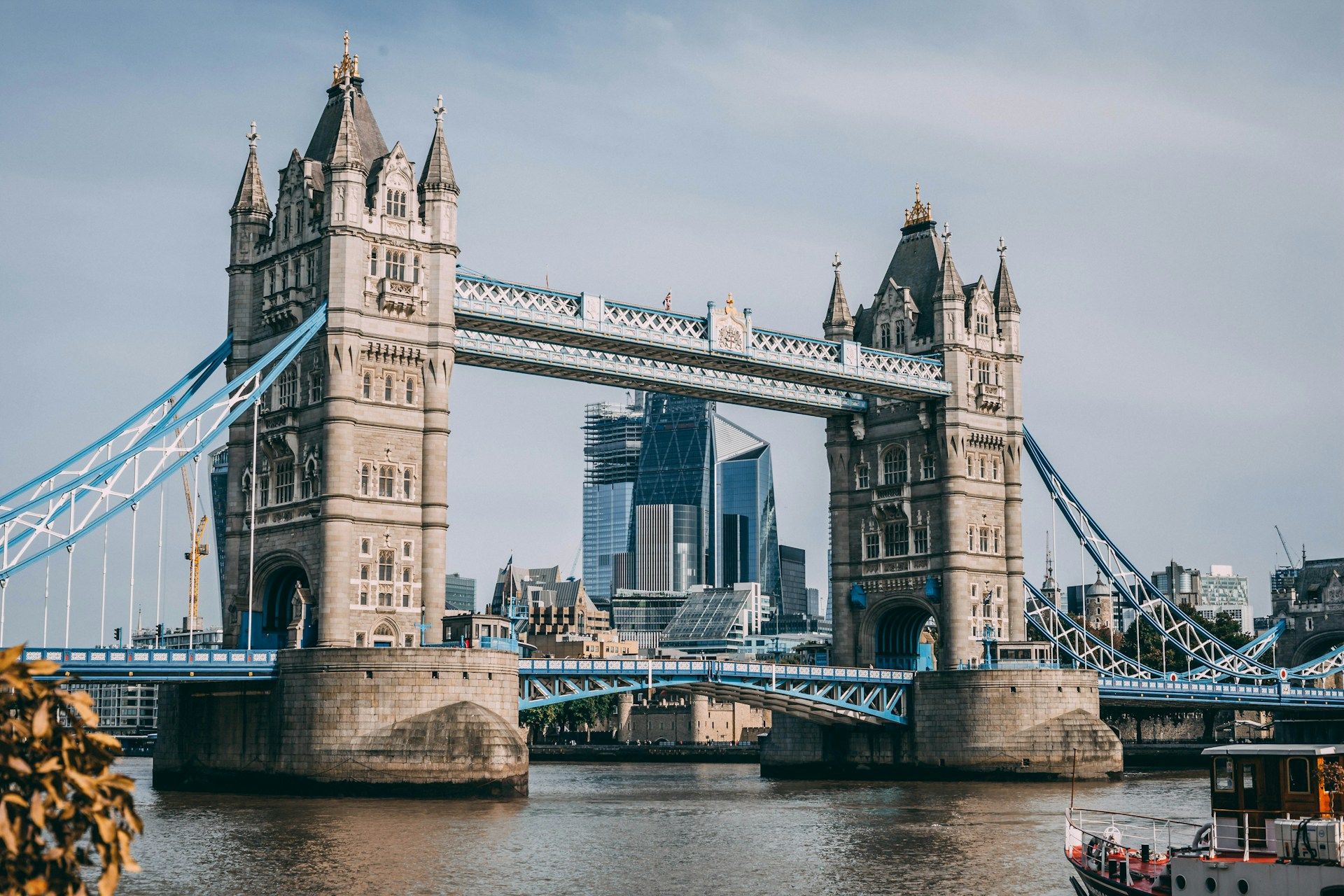
Photo by Giammarco Boscaro on Unsplash
There is a version of London that exists on phone screens and travel guides — Tower Bridge lit against a bruised evening sky, the Gherkin catching the morning sun at a perfect angle, the Shard piercing low cloud like a splinter of glass. These are real things. They are beautiful things. But they are not what makes London feel like London to anyone who actually lives here.
The city's architectural soul is stranger and quieter than that. It lives in the Georgian terrace that somehow survived the Blitz on an otherwise entirely rebuilt street. In the brutalist estate stairwell where someone has propped a pot plant on the window ledge. In the Victorian railway arches of Bermondsey that now host coffee roasters and ceramicists — spaces built for steam engines, now lit with pendant bulbs and smelling of fresh espresso.
London does not have one architectural identity. It has hundreds, and they sit right next to each other without apology.
The Shard changes depending on where you are
Most people encounter the Shard as a landmark — something you orient yourself by when you come out of London Bridge station. But spend time around it and it reveals something more interesting. From Borough Market, it disappears behind Victorian ironwork and you forget it exists entirely. Walk toward it along Tooley Street and it grows with an almost aggressive confidence. From the south side of the Thames on a grey afternoon, it dissolves into the sky completely, its 72 floors becoming invisible.
The architect Renzo Piano described it as a shard of glass accidentally dropped into the London skyline. That was deliberate understatement — the building is meticulously calculated — but the metaphor holds in one genuine sense. The Shard does not behave the same way twice. The light changes it. Your position changes it. The season changes it. It is the only building in London that consistently makes people stop and look up even when they have seen it a thousand times, which is something not even its critics have entirely managed to argue away.
What makes it genuinely significant as an architectural moment is not its height. It is what it did to that part of the city. Southwark was always the historically overlooked side of the river — the place where theatres and bear-baiting rings were built because they were banned in the City of London. The Shard did not gentrify Southwark, which was already deep into that process. What it did was give it a clear centre of gravity. A place to look toward.
The buildings nobody photographs
The most interesting architecture in London is not trying to be noticed. The Barbican is famous enough now, but for decades it was derided and misunderstood — a concrete fortress in the heart of the City that ordinary Londoners had no particular reason to enter. Walk through it today and what strikes you is the coherence of the vision. Everything connects. The water features, the walkways, the communal gardens three storeys above street level — it functions like a city within the city, which was entirely the point. It was built for people to live, work, and watch films and theatre within a single walkable environment. The fact that this vision was considered radical in the 1960s says more about how narrowly we tend to think about urban life than it does about the Barbican itself.
Then there are the places that sit just below the cultural radar. The Royal College of Art building in Battersea, new and angular and polarising. The Islamic Cultural Centre on Regent's Park Road, with its gold dome sitting in quiet confidence among the white stucco. The Leadenhall Building, known to most people as the Cheesegrater, which does something formally fascinating when you stand directly below it — the diagonal steel structure creates a perspective that makes the building seem to lean away from you at every angle simultaneously.
Why older London is not the same as historic London
There is a tendency to conflate old buildings with historic significance, which causes us to miss half of what the city is actually saying about itself. The Georgian townhouses of Islington are old and beautiful, but the more interesting history of that neighbourhood is written in its mid-twentieth century conversions — the bedsits carved out of family homes, the basement flats with bars on their windows that in the 1970s housed the particular kind of broke, creative person that the neighbourhood is now too expensive to contain.
History in London is not just in the buildings. It is in what those buildings have been made to do. A Regency villa that has been a family home, then a nursing home, then a block of luxury flats contains more of the city's actual story than any single-use heritage site. The walls have absorbed multiple versions of how people decided to organise their lives.
This is what makes walking in London different from walking in a city that was largely built in a single period — Chicago, say, or Melbourne. You are moving through time unevenly. One block is 1720. The next is 1963. The one after that is 2019. And they have all learned to get on with each other, more or less.
What the spaces are telling us now
The most significant thing happening in London's built environment right now is not any individual building. It is the systematic conversion of industrial and commercial space into cultural and residential use — and what that conversion reveals about which Londoners the city believes it is building for.
The old Battersea Power Station is the clearest example. A building of genuine grandeur — art deco turbine halls, the chimneys that appeared on the cover of a Pink Floyd album — repurposed into luxury flats and an Apple store. There is something genuinely lost in that. Not the building itself, which has been saved, restored, and is in better physical condition than at any point in its post-industrial life. What is lost is the sense that a building of this scale and symbolic weight could serve any part of London's population that cannot afford a premium membership.
The question London's architecture is quietly asking, in neighbourhood after neighbourhood, is who the city is being maintained for. The answer is being written in planning permissions, in glass facades where warehouses used to be, in the incremental replacement of the rough-edged and the affordable with the smooth-surfaced and the expensive.
That tension is, in its own way, exactly what London has always been. The city has never been comfortable. It has never resolved its contradictions into a clean narrative. What it has always done is hold them in a kind of productive suspension — beauty next to ugliness, wealth next to poverty, the medieval next to the contemporary — and kept moving forward regardless.
The buildings that make London feel like London are the ones that carry that tension visibly on their faces. That is what makes them worth looking at.
LondonGaze Editorial covers London's creative and cultural landscape from the inside.