The Quiet Studios Running London's Creative Underground

Photo by Boitumelo on Unsplash
The creative industry has a visibility problem. Not in the sense that it lacks attention — design and advertising and branding generate enormous amounts of media coverage, awards culture, and professional discourse. The visibility problem is more specific: the work that gets seen most is often not the work being done most seriously.
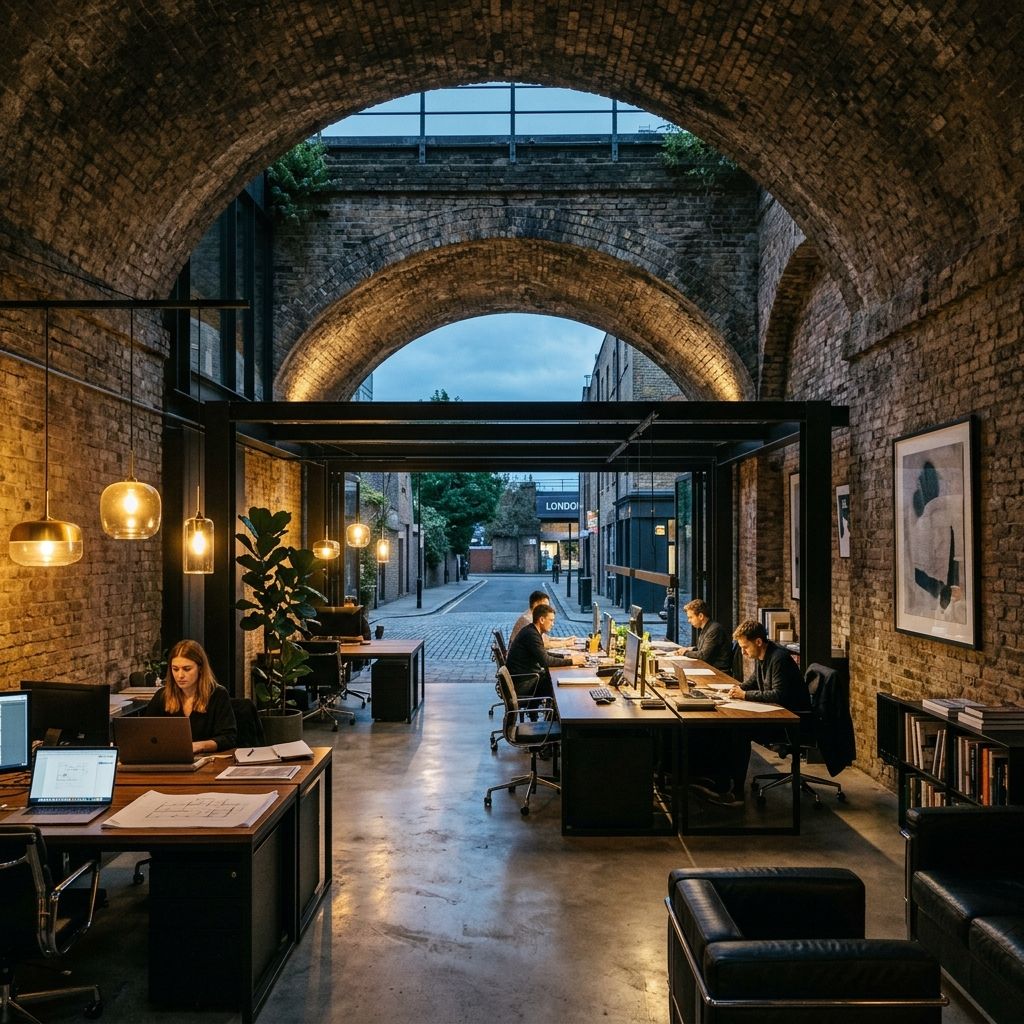
The large agencies have the marketing budgets to market their marketing. The small studios, often by choice and occasionally by necessity, do not. Which means there is a significant body of genuinely rigorous creative practice happening in London — in converted railway arches, in the back rooms of east London buildings, in shared studio spaces in Peckham and Lewisham and Walthamstow — that most people in the industry have not heard of, and that most people outside it would never think to look for.
This is not a complaint. It is, in many ways, the condition that makes the work possible.
What independent actually means
The word independent has been somewhat diluted by its own popularity. Every second creative agency in London describes itself as independent, including several that are wholly owned by global holding companies. Real independence — in the sense of controlling your own client list, your own creative direction, your own pace and process — is both rarer and more demanding than the branding suggests.
The studios that sustain genuine independence over years tend to share certain characteristics. They work with a relatively small number of clients at any given time, and they are selective about which clients those are — not in a precious or difficult way, but in the straightforward sense that bad-fit clients cost more than they generate, once you account for the creative energy they consume. They have usually turned down something significant at some point, which is how they know what they stand for. And they measure success in terms of the work rather than the revenue, which sounds like a convenient thing to say and is genuinely difficult to maintain when the rent is due.
The geography of the work
London's independent creative scene does not have a single postcode. Shoreditch still has studios, though the rents have pushed many smaller practices toward the surrounding areas — Bethnal Green, Hackney Wick, the edges of Dalston. Bermondsey and Peckham have become increasingly significant in the past decade, partly because the light is good in the old industrial buildings and partly because the Northern Line makes them accessible without requiring a Zone 1 address.
Some of the most interesting work is happening in places that would not appear on any creative industry map. A branding studio working out of a converted flat in Catford. A motion design practice operating from a shared space in Wood Green. A type foundry — a studio that designs typefaces for licensing — in a railway arch in Herne Hill that has no social media presence and does not want one.
What these places share is the architectural condition they are working in. The ex-industrial spaces of London provide something that purpose-built offices rarely can — the sense that the space has a history that predates your particular project, that you are working inside something that has already made it through several reinventions and might make it through several more. Whether or not that translates into the work is a metaphysical question. But most creatives who have worked in both types of space will tell you the feeling matters.
The client relationship
One of the things that distinguishes the better independent studios from larger agencies is the nature of their client relationships. At scale, clients are managed — accounts have account managers, relationships are mediated through layers of contact that exist partly to protect the creative team's time and partly to protect the agency's commercial interests. The client often ends up with less access to the actual thinking than they might expect, given what they are paying.
In smaller studios, the person you are talking to at the start of the project is usually the person doing the work. This creates a different quality of conversation. There is no internal translation happening between what the client actually means and what eventually gets communicated to the designers. The feedback loops are shorter. The misunderstandings that cost projects weeks at larger agencies get caught in hours.
This is not inherently better — there are projects that require the infrastructure and specialism of a large agency, and pretending otherwise is its own form of vanity. But for a certain kind of project, particularly the ones where the problem is genuinely unclear at the start and needs to be discovered through the work, the independent studio model produces something qualitatively different.
What the industry does not talk about enough
The economics of running a small creative studio in London are, in plain terms, brutal. Rents are high. Skilled people are expensive and correctly expect to be paid properly. The feast-and-famine rhythm of project-based income creates a planning problem that even well-run studios struggle to manage. And the cultural expectation that creative work should be discounted — or free for the right exposure — is a pressure that never entirely goes away.
The studios that survive are usually the ones where at least one person has figured out how to talk about money without apology. Where the pricing conversation is handled with the same directness as the creative conversation. Where the contract protects both parties and is actually read before it is signed. These are skills that design schools do not teach and that most creatives arrive in the industry without, which accounts for a significant portion of the studios that do not make it past their third year.
What London's independent creative scene needs — and what it only very partially has — is the kind of institutional support that helps sustain small practices through their difficult middle years. Not the incubator model, which tends to work best for businesses with a product rather than a service. Something more like what theatre has — a network of mid-scale organisations that can commission work, provide studio residencies, and create the conditions for creative risk-taking without requiring commercial justification for every decision.
Until that infrastructure exists at meaningful scale, the best of London's independent studios will continue to do what they have always done: survive on a combination of genuine talent, strategic client selection, and the particular stubbornness that seems to be a professional requirement for running a creative practice in one of the world's most expensive cities.
Most of them would not have it any other way. That is probably the most important thing to understand about them.
LondonGaze Editorial covers London's creative and cultural landscape from the inside.